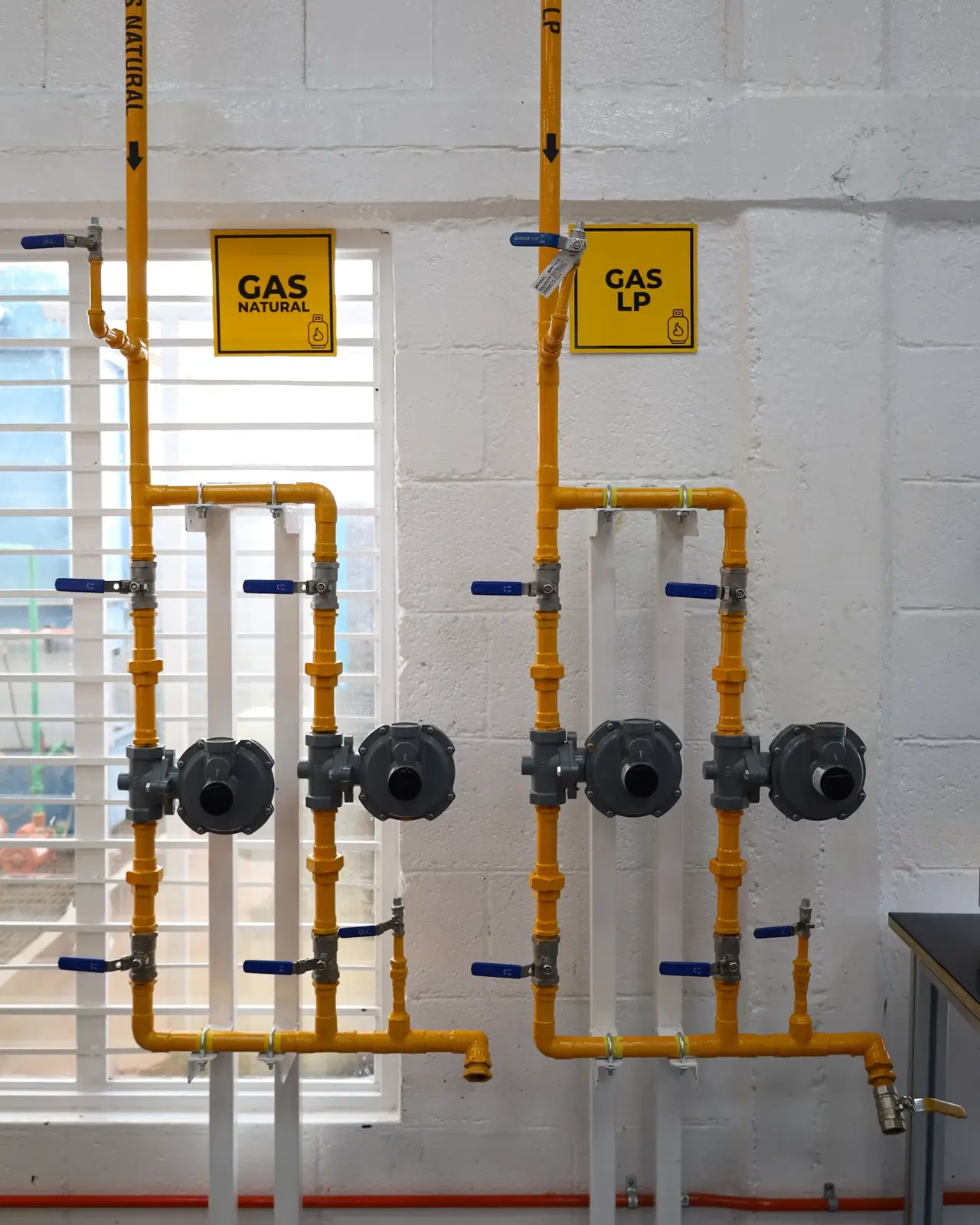
On a busy commercial or industrial site, gas pipework is easy to ignore. It runs along walls, across ceilings and under yards, and it usually works without anyone thinking about it. When it starts to show problems, the early warning signs are often small. A patch of rust near a bracket. A burner that trips more than it used to. A gas bill that has crept up for no clear reason.
The risk is underreacting. Facilities and site teams tend to treat these signs as maintenance niggles, when some of them point to pipework that is already losing integrity. This guide sets out the signs that matter most in commercial gas piping and how to tell a “plan it” issue from a “stop now” issue. It also explains what to do once you have spotted something. At Weld-Qual Services, we install, repair, test and maintain commercial gas pipework for industrial and commercial premises. These are the issues we see behind most repair work.
In short:
- A smell of gas or a hissing sound always needs immediate action, not monitoring.
- Corrosion, impact damage and failing supports are slower problems, but they get worse and cost more the longer they are left.
- The right next step is usually testing and inspection by qualified commercial gas engineers, followed by a repair planned around how your site runs.
Why gas pipework needs a different mindset to general plumbing
Much of the online advice about pipe repairs is written for water systems. It focuses on low water pressure, discoloured water and damp floors. Those signs are useful for plumbing, but they don’t translate well to gas.
With gas, a leak rarely leaves a visible trace. A small escape can go unnoticed for a long time while gas builds up in a ceiling void, plant room or enclosed space. The consequences of failure are also more serious than a wet floor. That is why gas pipework should be judged on risk, not on how dramatic the symptom looks. It is also why repairs belong with qualified industrial gas engineers rather than general maintenance staff.
Commercial installations bring their own pressures too. Pipework often feeds production plant, ovens, boilers or industrial heating, so a fault can affect output as well as safety. Sites are rarely empty, and steel pipework can be exposed to vehicles, weather and vibration in ways domestic systems never are.
The warning signs that matter most
A smell of gas
Natural gas is given its smell deliberately, so leaks can be detected. Any smell of gas around pipework, meters, valves or appliances should be treated as a gas escape until proven otherwise. Don’t try to trace it yourself.
Hissing or whistling near pipework
A faint hiss near a joint, valve or fitting can indicate gas escaping under pressure. On noisy sites it can easily be masked by plant or traffic, so it is worth listening during quieter periods.
Corrosion on steel pipework
Carbon steel gas pipework is durable, but it needs protection. Watch for flaking paint, rust staining, pitting or scaling. Corrosion tends to concentrate at specific points:
- where pipes pass through walls or floors
- under brackets and supports
- at ground level, where pipework rises from below
- in damp areas, outdoor runs and washdown zones
Light surface rust is not always a structural problem. Pitting or flaking metal is different, because it suggests the pipe wall is thinning.
Impact damage
In warehouses, distribution centres and factories, pipework sometimes gets hit by forklifts, delivery vehicles or equipment. Dents, kinks, bent sections or damaged protection barriers all need checking, even if nothing seems to be leaking. An impact can strain joints well beyond the point of contact.
Loose, broken or missing supports
Sagging runs, brackets pulled from walls and pipework that moves when touched all put stress on joints and fittings. Vibration from nearby plant can make this worse over time.
Appliances and plant behaving differently
Burners locking out, heaters failing to reach temperature or plant tripping more often can have many causes. Not all of them relate to pipework. However, if the problem appears across several appliances on the same supply, the pipework feeding them is worth investigating.
Unexplained rises in gas use
If consumption rises without any change in production or heating demand, a leak is one possible explanation. This is where secondary meters help, because they show which area or process is responsible.
Signs around underground runs
Buried gas pipework is out of sight, but not always out of mind. Dead or discoloured vegetation along a pipe route, bubbling in standing water or a gas smell outdoors can all point to an underground leak.
A history of patch repairs
Repeated fixes on the same section, old modifications nobody can explain or redundant pipework left connected all suggest a system that needs a proper assessment rather than another quick repair.
Watch and plan, or stop and act?
Not every sign carries the same urgency. This table separates the issues you can plan around from the ones that need action straight away.
| Sign | Urgency | What to do |
| Smell of gas | Stop and act | Follow emergency steps and call the National Gas Emergency Service |
| Hissing near pipework or fittings | Stop and act | Treat as a gas escape |
| Gas smell or bubbling over an underground run | Stop and act | Treat as a gas escape and keep people away |
| Fresh impact damage | Act promptly | Get the section inspected and tested before relying on it |
| Pitting, flaking or heavy corrosion | Act promptly | Arrange inspection and plan the repair |
| Sagging pipework or failed supports | Act promptly | Arrange repair before joints are strained further |
| Several appliances underperforming | Investigate | Check the supply as well as the appliances |
| Unexplained rise in gas use | Investigate | Arrange tightness testing |
| Light surface rust, sound paint elsewhere | Watch and plan | Record it and include it in planned maintenance |
| Repeated patch repairs | Plan | Assess whether a section should be replaced or modified |
What to do after you spot a sign
If you smell gas or suspect an escape
Safety comes first, and the steps are well established in the UK:
- Call the National Gas Emergency Service on 0800 111 999.
- Turn off the gas supply at the emergency control valve if it is safe to do so.
- Open doors and windows to ventilate the area.
- Don’t operate electrical switches, and avoid naked flames or anything that could cause a spark.
- Move people away from the affected area.
Once the immediate risk has been dealt with, the pipework will need repair, testing and recommissioning by qualified commercial gas engineers. For urgent pipework repairs, our 24-hour mobile number is 07494 460698.
If the issue is not an emergency
For corrosion, damage, failing supports or unexplained consumption, the aim is to understand the problem before it gets worse:
- Record what you have seen. Note the location, take photos and note when you first spotted it.
- Avoid temporary fixes by untrained staff. Tape, wraps and sealants hide the problem and can make later assessment harder.
- Check your records. Find drawings, previous test certificates and details of past repairs or modifications.
- Arrange tightness testing and inspection. This confirms whether the system is holding pressure and shows the condition of the pipework and joints.
- Plan the repair around your operation. Decide with your contractor how and when the work can be done with the least disruption.
How testing and repair planning reduce disruption
On a live site, the biggest concern is often downtime rather than the repair itself. Good planning makes a real difference here.
Testing tells you what you are dealing with. Tightness testing shows whether a section is leaking. Where welded steel pipework is involved, non-destructive testing can confirm weld quality without cutting into the pipe. Our wider welding work has been checked through radiographic, ultrasonic, dye penetrant and magnetic particle inspection, as well as visual inspection of welds.
Repair or replace is a practical decision. A single damaged section can often be repaired. A run with widespread corrosion or a long history of patch repairs may be better replaced or modified, especially if the site layout has changed since it was installed.
Prefabrication shortens the time on site. We prefabricate pipework in-house at our facility, using materials including carbon steel and MDPE, before our commercial gas engineers install it on site. Replacement sections arrive largely ready, so less cutting and welding happens in your building.
Isolation, purging and recommissioning are planned in. Repairs usually involve isolating part of the system, purging it safely and testing it before it goes back into service. Where it suits the job, gas hot tap services can allow a new connection to be made without shutting down the whole supply.
Planned maintenance catches problems earlier. Reactive repairs are sometimes unavoidable. A planned maintenance arrangement, though, means corrosion and support issues are found while they are still minor.
Getting ahead of the problem
The signs that commercial gas piping needs repair are rarely dramatic at first. Acting early means you can plan the work around your site rather than reacting to a failure. Treat any smell of gas or hissing as an emergency. Report corrosion, damage and failing supports promptly, and use testing to understand the condition of your system before deciding on repair or replacement.
If something on your site has raised concern, our team can help with inspection, testing, repairs and planned maintenance. You can reach our friendly team by visiting our contact page, calling us on 0121 505 1736, or emailing admin@weld-qual-services.co.uk.
Frequently Asked Questions
Gas pipework should be worked on by engineers qualified for that type of work. Our commercial gas certifications include COCNPI1LS (Core Commercial Pipe Installer/Commissioner), TPCP1 (Tightness Testing and Purging) and ICPN1 (1st Fix Commercial Pipework). Your own team still plays an important role in spotting and reporting signs early.
Often, part of the system will need isolating while work is carried out. Prefabricating sections in advance and planning isolation carefully can keep disruption limited. Let your contractor know about production schedules and access constraints early so they can be built into the plan.
Yes, but it is usually a “watch and plan” issue. Record it and have it checked during planned maintenance. If the rust is flaking, pitting or sits at a wall penetration or support, ask for an inspection sooner.
Have the site address, photos, the location of the problem and any available drawings or test records to hand. Details of the plant fed by the affected pipework and your operating hours are useful too.