Some welding jobs simply cannot come to you. When a steel beam is fixed in place, a pressure vessel has failed, or a fault threatens to stall an entire project, moving the work to a workshop is rarely practical. This is where mobile welding earns its value, bringing qualified welders and fully equipped rigs directly to your site.
For contractors, steel fabricators, site managers and facilities teams, knowing when to call in a mobile welder can save time, reduce costly downtime and keep programmes on track. Below, we explain what mobile welding involves and the most common situations where it becomes the right choice.
What Is Mobile Welding?
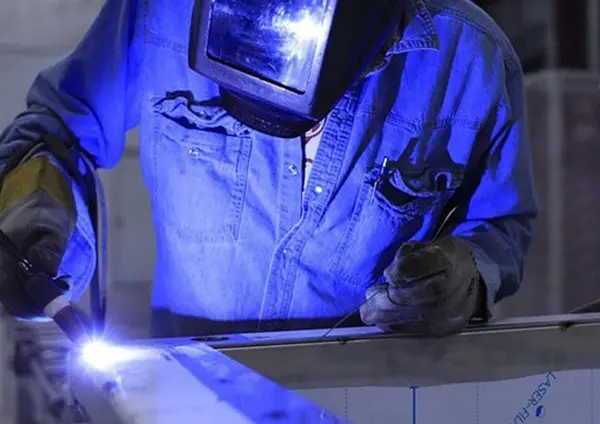
Mobile welding is the delivery of professional welding and fabrication work at your location rather than at a fixed workshop. Instead of transporting heavy or awkward items, a coded welder arrives with portable equipment, power supplies and the tools needed to complete the job on site.
At Weld-Qual Services, we provide comprehensive mobile welding services from our West Midlands base and operate nationwide. Our engineers carry fully serviced generators that supply both electrical and welding power, which means we can mobilise to almost any site regardless of the facilities already in place. Our welders are coded across a wide range of processes, materials and positions, and every project can be supported by qualified welding procedures to BS EN ISO 15614 and welder qualifications to BS EN ISO 9606.
The result is a flexible service that handles structural and secondary steel, pipework, pressure vessels and much more, all without the disruption of moving materials off site.
Signs You May Need Mobile Welding
There are several clear indicators that on-site welding is the sensible option. You are likely to benefit from a mobile welder when:
- The item is too large, heavy or fixed to transport safely
- A structural fault or breakdown is holding up work on site
- You need a fast, reliable response to an urgent issue
- Access, lifting or transport costs would outweigh the repair itself
- The work forms part of a live construction or installation programme
If any of these apply, calling in a mobile welding team is usually quicker, safer and more cost-effective than dismantling and relocating the work.
Common Scenarios Where Mobile Welding Is Needed
Mobile welding covers a broad spread of situations. Here are the scenarios we see most often across commercial and industrial sites.
On-Site Repairs
Damaged steelwork, cracked frames and worn structural connections often cannot wait, and they certainly cannot be lifted out and shipped to a workshop. On-site welding allows repairs to be carried out exactly where the fault sits. Our engineers assess the damage, prepare the joint and complete the weld to specification, restoring integrity without unnecessary delay.
Urgent Call-Outs
Failures rarely happen at a convenient moment. Damaged pipework, compromised pressure vessels and structural issues can bring an operation to a halt, and every hour lost adds cost. Weld-Qual Services offers emergency call-outs so a coded welder can attend quickly, diagnose the problem and carry out safe, compliant repairs. This reactive capability is one of the strongest reasons businesses keep a trusted welding contractor on hand.
Installations and Steelwork Erection
New steel installations, main and secondary steelwork and site fabrication all demand welding at the point of assembly. Whether you are erecting frames, fitting supports or completing a full steel installation, having coded welders on site keeps the build moving. We provide a complete site welding and steel installation service from start to finish, working to recognised standards such as EN 1090 for steelwork.
Modifications and Remedial Works
Projects change, and existing structures often need adapting. Modifications, strengthening to older structures and remedial steelwork are all well suited to a mobile approach. Alongside welding, our team can carry out cutting, grinding, drilling and plate or pipe bevelling on site. This means we can rectify misplaced bolt holes, prepare fresh joints and finish welds cleanly, all in a single visit.
Snagging
Before a build is signed off, minor faults and defects need identifying and correcting. Snagging can involve anything from missed steel connections and incorrect hole locations to poor workmanship that could stop a structure meeting regulations. A mobile welding team can attend, resolve these issues promptly and help you hand the project over on schedule.
Pipework and Pressure Vessel Work
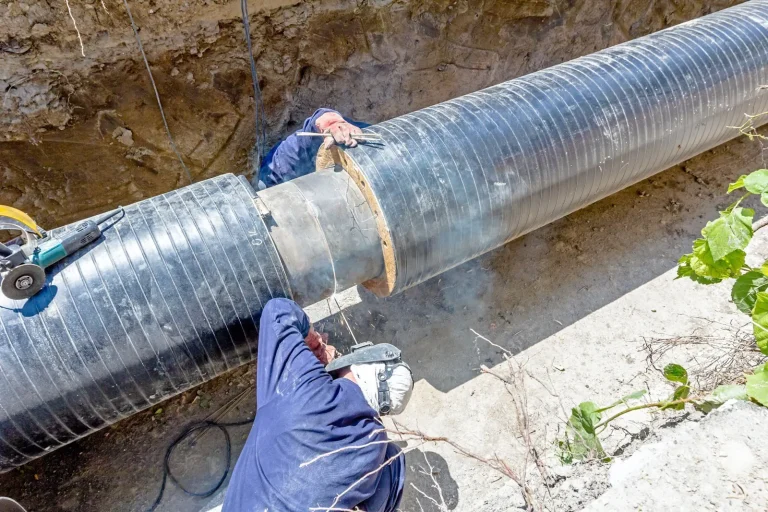
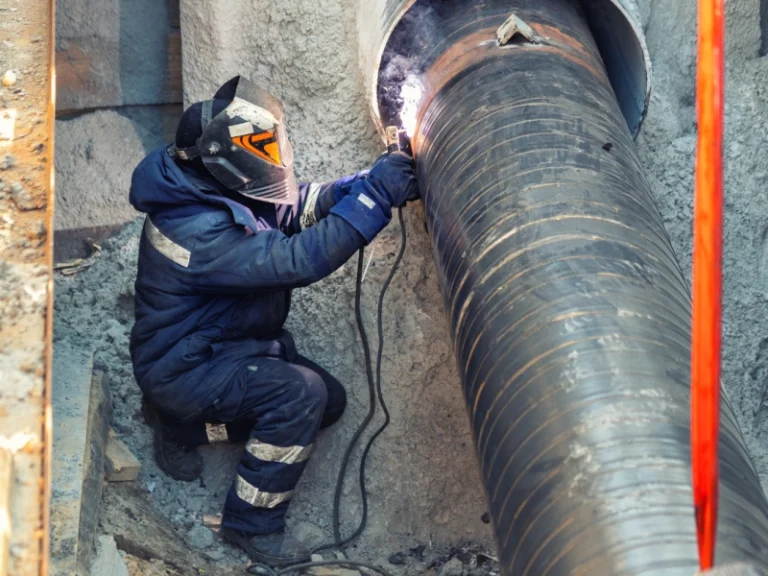
Pipework welding and pressure vessel repairs demand precision and full compliance. These items are frequently fixed within a wider system, making workshop work impractical. Our engineers are experienced in high-pressure systems and work to standards including EN 13445 for pressure vessels and BS 2633 and BS 4677 for class 1 pipework. Where the assurance is needed, welds can be supported by non-destructive testing such as radiographic, ultrasonic, dye penetrant and magnetic particle inspection.
Why Mobile Welding Often Beats Workshop-Only Solutions
The advantages of mobile welding go well beyond convenience. For large or fixed items, transport can require specialist lifting equipment, additional labour and considerable time, all of which add cost and risk. Bringing the welder to the work removes those steps entirely.
Reduced downtime is often the deciding factor. When a fault stops production or delays a construction phase, on-site welding lets work begin sooner and finish faster. Mobile teams are also skilled at practical, on-the-spot problem solving, adapting to site conditions, access restrictions and live working environments in a way that a workshop simply cannot replicate.
That said, mobile welding is not always the answer. Small, portable components with no urgency may still suit workshop handling. The key is matching the approach to the job, and a good welding contractor will advise honestly on which route serves you best.
What to Look for in a Mobile Welding Provider
Choosing the right partner is as important as choosing the right welding method. When comparing welding contractors, look for the following.
Coded Welders and Proven Procedures
Quality begins with qualified people. Every welder should hold the appropriate coding for the work in hand, backed by documented welding procedures. Weld-Qual Services maintains a library of procedures and welder qualifications to support compliance, and where a job falls outside an existing range, we obtain the correct qualifications before any welding begins.
The Right Capabilities
Confirm the provider covers the processes your project needs, such as MIG/MAG, flux-cored, MMA and TIG welding, along with cutting, grinding and edge preparation. A broad capability means fewer suppliers and clearer accountability.
Compliance and Testing
Welding compliance protects both safety and long-term performance. Ask how welds are verified and whether non-destructive testing is available to provide documented assurance. This matters most for structural steel welding, pipework and load-bearing work.
Responsiveness
For urgent situations, availability is everything. A provider offering genuine emergency call-outs, like our 24-hour service, gives you confidence that help is a phone call away.
In Summary
Mobile welding is the practical choice whenever work needs to happen on site, whether that means an urgent repair, a planned installation, a modification or a piece of steelwork that is too large or fixed to move. It reduces downtime, cuts transport headaches and puts qualified welding expertise exactly where you need it.
If you are weighing up on-site welding for an upcoming project or facing a fault that cannot wait, our friendly and experienced team is here to help. You can reach us by visiting our contact page, calling us on 0121 505 1736, or emailing admin@weld-qual-services.co.uk.